Wednesday, 13 October 2010

Immigration in society

Following the rise in immigration due to the 1948 Commonwealth Nationality Act, many White Britons seemed to react angrily at how many immigrants were arriving and were taking over most jobs and housing in areas such as Notting Hill. The film East is East shows immigration and the inital reaction to immigrants. Though previous events such as the Notting Hill race riots seem to show the negative reaction of immigrants.

The result of immigration had an impending affect on white Britons. The first influx of immigrants arrived from the Caribbean in 1955 and 1964. The prospect of housing and employment tempted many immigrants to arrive in Britain. Though, not all immigrants were welcomed, as the Notting Hill race riots in 1958, was an attack on black families in the area, by a group of white working class 'Teddy Boys'. The riots were spurred by groups such as Sir Oswald Mosley's Union Movement and other fascist groups, who advocated racism and sympathised with disaffected white residents to "Keep Britain White".

As well as this, there was an increase in violent attacks on black people through the summer. An example of this attach took place on 24 August 1958, where a group of ten white youths committed a series of serious assaults on six West Indian men in four separate incidents.

The riot is thought to have started on Saturday 30 August when a gang of white youths attacked a Swedish woman, Majbritt Morrison, as she had been seen arguing with her Jamaican husband Raymond at Latimer Road tube station. At first,they had shouted racial insults at him and were incensed when she turned on them. Seeing her the next night, the same youths pelted her with bottles, stones and wood and struck her in the back with an iron bar, until the police intervened and she was escorted home.

Later that night a mob of 300 to 400 white people, many of them "Teddy Boys", were seen on Bramley Road attacking the houses of West Indian residents

However, these attacks are not the only ones directed at ethnic minorites. The Southall Riots (1979) was initially an anti racist campaign against the National Front which became violent, as over 40 people, including 21 police, were injured and 300 were arrested . The leader of the campaign , Blair Peach, a local school teacher and anti racism campaigner who campaigned against neo Nazi movements and stood up for ethnic minorites was knocked unconscious and later died.

As well as this, the Toxtett Riots in 1981 was in part due to the long-standing tensions between the local police and the black community, as black people were not treated equally and were subjected to hatred by the police.

Though the riot could be related to the implementation of the sus laws, which allowed the police to search any person who looked dodgy or was doing any wrong doing.

In conjunction to this, the Brixtion Riots in 1981 there were a futher attack on immigrants, as the body of a black youth, who had been stabbed in an attack, was seemingly being helped by police. A crowd gathered and, as the police did not appear to be providing /obtaining the medical help the victim needed fast enough, the crowd tried to intervene. The police then tried to take the wounded youth to a waiting car , however the crowd then struggled with the police, which resulted in more police being called in to the area. Rumours spread that the youth had been left to die by the police, or that the police looked on as the stabbed youth was lying on the street. Over 200 youths, black and white, reportedly turned on the police, which resulted in an angry conflict between the police and black people, due to negligence and supposed hatred.

Following the Brixton riots, similar attacks on the police followed, with the Chapeltown riots and Moss Side riots aimed at police , due to economic problems, as well as the treatment of ethnic minorities such as blacks. Though attacks between ethnic groups have been common, with the Handsworth riots between Asians and Blacks down to the fact that Asians were prosepring in the area, much to the jealousy of the black community in the area, though the riots may have been down to poor social conditions, racial discrimination, poverty, unemployment and dilapidated housing.

Analysis of Immigration in British Comedy film

Between 1950 and 2000, there was a remarkablly repaid growth of the ethnic minority population in Britain. The British Nationality Act of 1948 granted citizens of the Commonwealth countries the right to enter, settle and work in Britian, as well as the right to bring thier families. However, between 1951 and 2000, the number of ethnic minorities resident in Britain rose from under 100,000 to 4,039,000.

Within British comedy film, the issue of immigration has been explored with films such as East is East (1999) focusing on a Muslim family living in Bradford in the 70s. Interestingly, immigration from India and Pakistan reached its peak between 1965 and 1974. Therefore, East is East gives an insight to how ethnic minority families lived in urban areas, where there was a higher number of white Britons lived.

Analysis of East is East trailer (1999)


East is East focuses (1999) focuses on an unconventional family living in Salford, Greater Manchester, in 1971. The family is comprised of mixed-ethnicity, where the father is Pakistani and the mother is English. The father, George Khan ( Om Puri) is stereotyped as the strict Asian father who expects his family to follow the traditional Pakistani ways. Howeve his children who were born and grew up in Britain, tend to adopt the British lifestyle and culture,which results in them rejecting their father's traditonal rules on dress, food, religion, and lifestyle.

In this trailer, the rejection of Pakistani values is signified, as one of the protagonists, Tariq (Jimi Mistry) is absorbed in the British culture of drinking and dressing in western clothes. In contrast to Tariq, Muneer (Emil Marwa) is indoctrinated into Islam and seems to follow his father's rules. In society, about 25 per cent of Pakistanis and Bangladeshis aged between fourteen and twenty five were attending Muslim religious services by 1993. Evidently, the film supports the facts, as the family are forced to attend Koran classes by their father and are indoctrinated about the Muslim faith.

Within the trailer, the rejection of traditional values is signified, as Tariq is signified in a long shot smoking, which goes against the Muslim values and is deemed sinful. As well as this, Tariq has a whit girlfriend which signifies how he is more liberal and westernised, as he chooses to walk out on his family rather than marry a 'Paki'. Like most Asian families, George Khan stereotypical chooses to have arranged marriages for his sons, this is signified in the trailer, as Mr Khan is happy at the prospect of seeing his sons married. As he meets another Pakistani family, he is introduced to two daughters of a wealthy man, Mr Shah (Madhav Sharma) . However, his joyful facial expression changes, as seen in a close up shot. He reacts strongly at the sight of the two women who are ugly, though he reconsiders and puts on a brave face.

In contrast to this, Abdul (Raji James) is signified in a medium shot drinking a pint of beer, which connotes how younger muslims were more westernised, due to their environment and seemed to adopt British culture. Unlike proper muslims , the Khan family eat sausages and are cared by an English mother which connotes how they are more British than Pakistani. The British reaction to arrange marriage is comical, as Tariq and Abdul are marrying two 'ugly' women, which is ironic, as they want to marry other women who are not Pakistani.

In this film, the immigrants seemed to be accepted by younger white Britons. Though older Britons such as Mr Moorhouse, are more racist and exenophobiic towrd immigrants in the country and is an avid Enoch Powell supporter. In many ways, the film reflects typical opinion of members of the public in the 1970s, as White Britons were more racist, with groups such as the National Front opposing immigration.

Southall Riots (1979)

This attached article is one of the famous attacks on the ethnic minority in the 1970s. The Southall riots in 1979 showed public contempt and hatred of ethnic minorities. In this article from the BBC, the Southall riots have been disputed as a major event which resulted in the death of school teacher Blair Peach who defended ethnic minorities living in Southall.

1979: Teacher dies in Southall race riots

A 33-year-old man has died from head injuries after a bloody battle broke out between police and demonstrators in Southall.

The fighting began when thousands of protesters gathered to demonstrate against a National Front campaign meeting.The extreme right-wing organisation had chosen Southall Town Hall to hold its St George's Day election meeting. The area has one of the country's biggest Asian communities.

"It was a case of the boot going in - there was no attempt to arrest anybody"

Martin Gerrald, Anti-Nazi League protestor

Police had sealed off the area, and anti-racism demonstrators trying to make their way to the town hall were blocked.

In the confrontation that followed, more than 40 people, including 21 police, were injured, and 300 were arrested. Bricks and bottles were hurled at police, who described the rioting as the most violent they have handled in London.

Among the demonstrators was Blair Peach, a New Zealand-born member of the Anti-Nazi League. A teacher for special needs children in east London, he was a committed anti-racism activist.

During an incident in a side street 100 yards from the town hall, he was seriously injured and collapsed, blood running down his face from serious head injuries. He died later in hospital.

Witnesses said his injuries were caused by police baton blows. Martin Gerrald, one of the protestors, was nearby Mr Peach at the time.

"Mr Peach was hit twice in the head with police truncheons and left unconscious," he said. "The police were wielding truncheons and riot shields. It was a case of the boot just going in - there was no attempt to arrest anybody."

'Excessively violent' charge

Another witness, 24-year-old Parminder Atwal, took the injured teacher into his house and called an ambulance.

He said, "I saw a policeman hit a man on the head as he sat on the pavement. The man tried to get up, fell back and then reeled across the road to my house."

The Anti-Nazi League claim Mr Peach bore the brunt of a "brutal" and "excessively violent" police baton charge.

A spokesman for Scotland Yard said it was impossible to comment on the death until a full-scale inquiry had been completed.

Information regarding Bend it like Beckham and family values

In conjunction to Bend it like Beckham, the family life and values seems to be explored. Though, these films seeimgly explore the change in family roles, with the daughter choosing to pursue her dreams, regardless of her traditional parent's wishes for her to get married and settled. As well as this, the film reinforces the idea of pursuing your dream and tackles serious topics such as racism.

This article explores the film and is reception in society. Though it also explores the themes which are explored in the film and the exploration of traditional values. As well as this, the positive values of multiculturalism and family values are discussed.

Review: Bend it like Beckham is like curry

NEW DELHI: Bend it like Beckham is, in many ways, like Indian curry with extra masala topping.

Its rich, steamy flavour of tummy jiggling humour in a London corner, where Whites and Asians share fences, faux pas and fancies, is perhaps why Gurinder Chadha's film topped the British charts for weeks, grossing more than 11 million pounds.Coexistence is the core ingredient, like spices in curry, of the two-hour film that is releasing here on July 12.

Like in the teeth-clenching irritations of the protagonist, Jaswinder (Jess) as she copes with the neo-orthodoxies of her Sikh family trying to keep alive its traditions, and her own obsession with football, and its chic poster-boy David Beckham.

"Everybody likes Beckham. No one can bend the ball like him," Jess says in the film.
Co-existence, for instance, in the friendship between Jess and the English Juliette, who bond like blood sisters, while kicking balls and otherwise.

And co-existence also in both their mothers who agonise on their marital prospects, lament their small breasts and fear that they are lesbians.All of which, like the apprehensions of mothers usually are, turn out to be completely unfounded.

This is not, contrary to promos, an Asian angst film. Despite the liberal garnishing of stereotypes of religion, modesty and "good behaviour" there's no escaping that this is, basically, a British film. Made by a Briton, for Britons. "No one assumed that because the film featured Asian characters that it would only appeal to Asian audiences," wrote Chadha in "Connecting", a British Council magazine in India.

She also wrote: "I was tired of 'issue films' about British Asians that only saw race and culture as a problem, "I wanted to make a feel good comedy that authentically showed how people in a corner of West London live and truly captured the way both children and parents have to bend the rules to achieve their dreams." "Bend It. . ." therefore is really about the bending of rules, social paradigms and lives -- all to finally curl that ball, bending it like Beckham, through the goalpost of ambition.

It about Jess' dad, subtly and beautifully played by Anupam Kher, once banned from playing cricket because of his turban. And whose prejudices surge strong even today as he tells Jess' Irish coach: "There are no Indian players in the men's side, do you think they'll let our women play?"

"But Nasir Hussain is our cricket captain. He is Indian!" retorts his indignant daughter."He is from a Muslim family, they are different," snaps her mother.
There it is -- the divide. Subtle, understated, but so very much there. Whether with Punjabis complaining that their neighbours were always "upset" about their (noisy) celebrations, or Jess' football coach saying he understood what it felt like to be called a "Paki" because he was Irish.

The creeping divide shows that Britain is changing, but hasn't quite changed yet.
The stiff upper lip has travelled miles from the time Chadha's father was denied a pint at some pubs at Southall, but like dollops of coagulated spice in badly stirred curry, discrimination crops up to spoil the taste, every now and then, in multi-racial Britain.
Chadha though is right in saying that her film is not only about "issues". It is about laughter, great mixing of Punjabi and Western music that includes everybody from Victoria Beckham, Bally Sagoo, Mel C, Nusrat Fateh Ali Khan and Bina Mistry.

It's about living and loving together. And you know that Britain has really bent towards the East, when Juliette's mother tells Jess to "teach her some of our culture, especially respecting your elders."And, of course, the Hindi tattoo on Beckham's arm that spells "Victoria".

Sunday, 3 October 2010

Exploration of Family Life in British comedy film

On the whole, British comedy films tend to focus much on the family, with films like On the Buses, Bend It Like Beckham, East is East and Three and Out focusing on family values, gender roles and the change in the role of the family through different decades. In many ways, British comedy film has managed to be more controversial , in terms of breaking taboos of interracial marriage , as well as sex, domestic violence and other issues in society.

Throughout the years, British comedy film has shown family life in different ways. With the rise of 'new wave films' in the 1960s and 1970s including ethnic minorities in film, as well as controversial issues . Effectively, films such as On the Buses (1969 -73) focused on a working class British family, with the mother being the matriarch and her son (Stan) being the breadwinner. By focusing on these families, the audience were able to identify with many of the characters, such as (Arthur) who has trouble finding a job.

As well as this, British comedy film has managed to convey the lives of Asian families and ethnic minorities, with East is East (1999) being a prime example. Films like East is East promote and raise awareness of a multicultural society, where people can understand about different cultures and values.

Following the controversial yet successful film , East is East, British directors such as Gurinder Chadha have also been successful in making comedy films, such as Bend it Like Beckham (2002) which revolve around ethnic minorities; with topics such as marriage, murder and careers being raised in films.

Analysis of Bend it Like Beckham (2002)


Bend It like Beckham (2002) revolves around a young Sikh girl Jess Bhamra (Parminder Nagra) who is fanatical about football, and particularly idolises David Beckham due to his football skills. She manages to have a kick about with her male friends in the park and is spotted
by Juliette Paxton (Jules) played by (Kiera Knightly) who plays for a local women's team (Hounslow Harriers). Initially , Jess is not permitted to playing sports, as her traditional Punjabi parents want her to go to law school and to learn how to cook Punjabi food so that she can attract a nice Punjabi husband. The film cites around cultural clashes and personal aspirations and shows how the role of women is changing, as Jess aspires to be a footballer, which gives an alternative representation of women as succeeders.

In this trailer, the audience get a chance to learn about different cultures, notably the Indian culture, as the opening of the trailer signifies a blushing Indian bride in a medium shot. This therefore shows how women in the Indian culture are meant to get married, which is often arranged. Though, the comical aspect of the scene, is when the camera man asks the bride to look down and look more sad, which connotes how she is meant to represented as being innocent and shy, while also looking as if she misses her family.

However, the binary opposition of Jess as the tom boyish, carefree women is represented, as she violently punches one of her male friends in the lower region, thus connoting how she wishes to be equal and is given a more subordinated role amongst the male friends, which is quite humorous and identifiable for aspiring female footballers.

In the trailer, the family's naivety and traditional values are signified, as Mrs Bhamra lectures Jess about her sister's marriage, and the fact that football seems to get in the way. In many ways, the parents are stereotyped as being quite strict and ignorant, as they don't want Jess to be a footballer, but an accountant or lawyer, which all Indian parents tend to demand. What's more, the humorous aspects are shown, as Jess does kick abouts with vegetables, which connotes her lack of enthusiasm at cooking and being domesticated.

Though, the film actually challenges the representation of family members, as Jess dreams of being a footballer, whereas her parents want her to be married and have a reputable profession. As wells as this, the mother is represented as being the dominant member in the household, who seemingly controls the family and is constructed as being quite strict and overwhelming, which Indian parents can identify with.

Evidently, the use of the non deigitic opera sound, in conjunction with the medium close up shot of Jess taking a free kick signifies the binary opposition of family values and aspiration, as the surprised facial expression of Jess, connotes how she is torn between being more traditional or being more westernised and more liberal. In conjunction to this, the use of the voiceover ' Bending the rules' connotes rebellion and liberty, as Jess aspires to be a professional footballer, however she has to stand up to her parents. The use of Jess' voice over signifies how she wants to take her chances, rather than doing something that she can do in her everyday life, ' Anyone can cook aloo gobhi, but who can bend a ball like Beckham'. This particular voice over gives a more angry reaction to traditional gender roles, as she, like normal teenage girls would aspire to be different.

As well as Bend it Like Beckham (2002), other more contemporary films have managed to focus on issues such as family life and marriage. Most recently, It's A Wonderful After Life (2010) revolves around arranged marriage and the troubles which face mothers to get thier sons or daughters married

Scene from Its A Wonderful Afterlife (2010)


Analysis from beginning to 2:00

It's A Wondeful Afterlife (2010) is produced by Gurinder Chadha and focuses on ethnic minorities and the concept of marriage. The film itself focuses around a single mother, who has to has to get her daughter married, but is pressurised into finding a sutiable match, as the previous suitors decline her offers. Therefore, she resort to murder in order to find the perfect match for her daughter.

Evidently, the theme of marriage is signified in this scene, as the mother tries to make an alliance for her daughter. The use of the Sikh temple setting connotes how Sikh marriage is significant and is carried out in front of the Guru Granth Sahib (Holy scriptures). The long shot of the protagonist is immediately followed by a cut which signifies two older women who are criticising and expressing thier concerns at the possible match for thier sons. The gestures made by the women are more comical, as they joke about her weight and the fact that she eats too much.

Though, the use of the close up shot of the man's facial expression connotes disgust and annoyance, as the female protagonist shrugs which connotes how she seems to be unable to respond to her mother forcing her to meet potential suitors. In most ways, Roopi is rejected due to her weight, as the over the shoulder shot signifies how the two women are unsatisfied with her and make excuses of her being unsuitable for her son. Though, this scene responds to the fact that Asian mothers seem to forcibly make thier children eat in excess, therefore they are unfit. The sense of futility is signified, as the man seems to be stereotyped as quite laid back and Westernised, as the long shot of him in his modified car shows how he is careless and not entirely perfect.

What's more, the long shot of Roopi and her mother connotes how they are disappointed at being rejected again, as signified through the subtle paralell sound of the guitar . Strangely, the mother at the temple is murdered, as the close up shot of her face with a kebab sheekh lodged in her neck signfies how the murder could have been part of a hate crime. In effect the surprised facial expression of the woman is quite funny, as her murder is unconventional to say the least.

Though, this scene progresses in order to signify the ghosts of previous alliances, as the ghosts appear through the long shot. Funnily enough, the ghosts are signified in a medium shot, as they have been killed in food related incidents. Therefore, the film satirises the fact that Indian cooking, at times is lethal, as the ghosts have been killed in strange yet comical ways.

Wednesday, 29 September 2010

Religion and Terrorism in British Comedy film

Over the years, British comedy has managed to explore the controversial issue of religion. Though, the trouble has generally been with the audience reception, with Monty Python and the Life of Brian(1979) being highly blasphemic and offensive to the Christian faith, due to the references to Christ and biblical references.

Though, the role of religion in British comedy film has also been the subject of much criticism, as the terrorist attacks on September 11th and July 7/7 bombings in London sparked a wave of comedy films which mock and respond in fear to terrorism and Islam, with Four Lions (2010) being more controversial. In many ways, the film responds to social concerns, as terrorism has been more recurrent in the news, as the wave of terrorist attacks have resulted in moral panic amongst civilians, as they don't know where the next terrorist attack is going to happen.

In accordance to this, Four Lions gives an alternative representation of suicide bombers, as they are represented as being quite brave, but stupid, as they have not motive, apart from sheer excitement at destruction and killing.

Scene from Four Lions


Initially, Chris Morris ( known for his controversial report on paedophilia on Brass Eye) spent 3 years researching around terrorism and Islam, for the film. Morris recieved advice from terrorism experts, imams, the police , secret service, as well as opinions from ordinary muslims. Morris' intial research was carried out before the July 7/7 bombings, of which sparked enthusiasm from Morris to create a film about terrorism. Though, the film was rejected by Channel 4 and BBC, as it was too controversial and would effect the muslim public.

Four Lions is a low budget British comedy film which revolves around a group of four jihadists, Waj (Kayvan Novak), Omar (Riz Ahmed), Adeel Akhtar (Fassel) and Baryy (Nigel Lindsay), who is a Islamic convert. These men try to push their suicidal dreams of glory to the breaking point, with their motives and dreams clashing, resulting in many awkward situations.

Within this scene, the issue of Islam is raised as being a more controversial issue. In many ways, the director Chris Morris gives a fair representation of the public, as he intends to show moral panic and how people react towards muslims in society . As this scene is shot in a conference hall, the use of medium close up shots of the panel, signify anxiety and shock, as they are subjected to hostile reception by a member of the audience. In effect, the audience member is giving his own opinion on muslims, as they are given negative stereotypes, as being bombers or radical extremists. These negative stereotypes seem to leave an impression of young muslims who revert to terrorism as a means of escape and hatred.

Though, the comical aspect of this scene is when the audience member reveals in a medium shot , that he is carrying armed explosives. The camera quickly zooms out in order to catch the audience's shocked reaction. Whats more, the deranged audience member begins to rap, which comes as a shock, as this shows how young muslims seem to interpret terrorism as a social organisation and seem to think radical terrorism is 'cool'. The scene actually ridicules terrorism, as it shows failed attempts of suicide bombers, as the man's bombs fail to explode, revealing party popper confetti, which seemingly calms audience expectations of the scene.


Critical Reception

Surprisingly, Four Lions received positive reviews in the media and approval from the muslim community. Whats more, the film managed to impress at the Box Office on its opening weekend, generating the highest site average of all the new releases (£5,292) and making a total of £609,000.

In the media, the reviews were generally positive, showing how the film conveyed reality and reaction to moral panic around terrorism. Here are a few critical responses from newspapers

[Chris Morris'] seemed to evoke the claustrophobic mundanity of the Muslims’ lives, and showed their quarrelous banter, their flimsily pick 'n’ mix approach to the Koran all feel painfully, brilliantly real." Daily Mail

Critic Kaleem Aftab responds by saying how Morris ' exposes a myth of terrorist bombers being trained assassins but instead exposes them as being confused young men.' The Independent

However, Nick Fraser believed that the film endorsed homegrown terrorism.

'I wasn't sure how to handle a jihadi who discusses going to heaven with his nine-year-old son,' he wrote. The Observer

'Chris Morris depicts a movement of violent berks and prats. In this film, everyone is stupid. The suicide bombers are stupid; the coppers are stupid; even the clever suicide bomber with the gentle, loving marriage and adoring son is stupid' The Guardian

'The most uncomfortable aspect of Four Lions is the excruciatingly happy, healthy, fulfilled home life of Omar. Just as we have become accustomed to the idea that only idiots or creeps want to kill people by blowing themselves up, Morris coolly presents us with a self-evidently nice, commonsensical guy who loves his family'. The Guardian

'Despite what is happening in the news every day, there is something daring and refreshing about a film that tickles the jihadists in the ribs until fundamentalism becomes farce.' The Times

On the whole, the critics from the UK newspapers cite how the film satirises Islam and shows the normality of the terrorists. Though, the film also shows public paranoia and fear, as the characters are different in their personalities and dreams, with Barry being the egomaniac and Omar being the more sensible yet stupid leader of the bunch.

Crime and Deviance in British comedy film

Within British comedy film , the issue of crime and deviance has been explored in depth, with the earlier dark comedies exploring serious issues. Though, British comedy tends to reflect crime in a lighthearted way. Notably, films such as The Lady Killers (1955) focus on crime which involves conmen trying to exploit old women, though with comical results. As well as this, modern comedies on crime such as Parole Officer (2001), Hot Fuzz (2007), Home Alone (1990) seemingly satirise social issues, and policing in particular. Interestingly, these films relfect the incapability of the police to control issues, with Hot Fuzz being a prime example, as some of the officers are constructed as being more laid back, unfit and carefree.

Though, comedy has managed to give a more accurate stereotype of the comical, haphazard police and secret agents, who manage to mess things up, but are still touted as the 'Proppian hero', as evident with Rowan Atkinson in Johnny English (2003).

Scene from Hot Fuzz (2007)

http://www.youtube.com/watch?v=9uPlNKWWsgY

Hot Fuzz revolves around the life of Nicholas Angel (Simon Pegg), a proud, dedicated police officer, working in London's Metropolitan Police Service. Angel excels in every area of his work and is commended for his numerous achievements, making him better than his colleagues. Due to his hard work, he is promoted by his superiors and is transferred to a rural village called Sandford (Gloucestershire), where he meets a group of laid back, care free police officers such as Danny Butterman (Nick Frost).

In many ways, Hot Fuzz (2007) is an example of films which reflect current social issues. In response to the July 7/7 terrorist attacks in London, police had to be more resolute and attentive over threats to the country. However, the accidental assassination of a suspected Brazilian electrician Jean Charles De Menezes at Stockwell Station on 22nd July 2005, resulted in a moral panic over policing. As a result, this mistake signified how the police intelligence was misleading and how inadequate the police was at handling situations which gradually led to the Chief Met Police Commissioner Sir Ian Blair to resign over fears of disorganisation and poor government intelligence.

This article from the Guardian looks at how police are unable or in many ways incompetent at handling situations such as terrorist alerts, as their is usually mis communication with the Metropolitan Police and police officers on patrol. The article mocks the police for thier incompete and follow up in the investigation, as they have made a huge cock up.

De Menezes shooting investigation 'like an episode of Fawlty Towers', says Brian Paddick

By SARAH OLIVER and MARTIN SMITH

Last updated at 12:14 05 August 2007

One of Britain's most prominent ex-lawmen has likened scenes that unfolded in the aftermath of the fatal shooting of an innocent Brazilian at Stockwell Underground station to 'an episode of Fawlty Towers'.

Brian Paddick, who recently resigned as a Deputy Assistant Commissioner at Scotland Yard, said the sequence of events that followed the tragic shooting by police marksmen of Jean Charles de Menezes starkly exposed weaknesses at the top of the Metropolitan Police.

As a one-time member of Met Commissioner Sir Ian Blair's inner circle, Paddick reveals the confusion at the heart of Scotland Yard during the height of the Al Qaeda threat and how an extraordinary confrontation with the Commissioner presaged the end of his own high-flying police career.

Paddick spoke out following the publication last week of the Independent Police Complaints Commission (IPCC) report into whether Scotland Yard told the truth in the hours after officers shot the wrong man.

The report found that Sir Ian had not known for 24 hours that De Menezes was innocent because his senior command had failed to tell him.


Forced out: Paddick feels his honesty cost him his career

In an exclusive interview with The Mail on Sunday, Paddick:

• Questions how Sir Ian found himself in a position where he had to explain that his high command kept him in the dark.

• Reveals that he feared there would be a cover-up by the Metropolitan Police.

• Claims that he felt sidelined and forced out of his job after he challenged the official line on who-knew-what about the shooting.

Paddick's story starts on Thursday, July 21, 2005, when a gang launched a wave of failed terror attacks on the London transport system. It was a mere fortnight since the 7/7 bombings had killed 52 people and injured another 800 on London's public transport network.

Shortly after 10am the following day, Friday, July 22, 2005, De Menezes, 27, was shot dead by anti-terror officers who believed that they had failed- bomber Hussain Osman in their sights.

Paddick claims that at 3.15pm on that Friday he was told by two of Sir Ian's closest aides, Chief Superintendent Moir Stewart and Chief of Staff Caroline Murdoch, that the dead man was a 'Brazilian tourist'.

Both officers later disputed that they had used that expression.

However, Paddick claims the conversation went thus: 'You'll never believe what we've done now,' said Chief Supt Stewart. 'We've shot a Brazilian tourist.'

'You're joking,' replied Paddick.

'I'm not,' said Stewart.

'No,' added Murdoch. 'We've found a Brazilian driving licence in his back pocket.'

Minutes later, said Paddick, Sir Ian told a Press conference that the shooting was directly linked to the operation to catch the failed bombers ? a statement that Paddick felt did not tell the whole truth.

At about 4pm, a knot of senior officers, including Paddick, met in Assistant Commissioner Alan Brown's office and were given the Brazilian's name.

Then, at 5pm, a meeting chaired by Sir Ian was held in Room 806 of New Scotland Yard. Paddick was there. Another Assistant Commissioner, Andy Hayman, said that the police would need DNA evidence to confirm the dead man's identity.

'By this time I was concerned there was some sort of cover-up,' said Paddick. 'But I was bound by my loyalty to my Commissioner and the fact that I was outranked by Alan Brown and Andy Hayman.

Jean Charles de Menezes was shot dead at Stockwell Underground station

I did think people would have understood if the Met had confessed promptly to shooting an innocent man ? the Press and the public were talking about a war-time situation that summer.'

Paddick is adamant that the calamity was common knowledge among Sir Ian's aides.

'The information available was good enough for the Foreign and Commonwealth Office to be told on the day of the shooting,' he said.

'What if the Brazilian Ambassador had telephoned the Commissioner personally to discuss the killing of one of his nationals?

'If it was correct that senior officers such as Assistant Commissioners Andy Hayman and Alan Brown had not told him, Ian Blair would have run the risk of looking stupid and out of control of his own force.
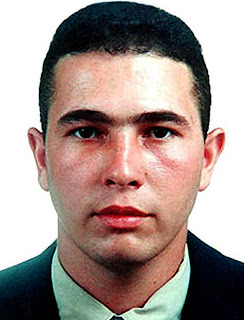

'Detective Chief Superintendent Maxine de Brunner, staff officer to Deputy Commissioner Paul Stephenson, was asked by Blair at 6.30pm if they had an ID on the victim yet. She said no. Yet her boss's secretary Laura Holford gave evidence to the IPCC that she [Holford] knew by 4pm the man was an innocent Brazilian.

'By 7pm on the day of the shooting the Muslim Safety Forum, a community liaison group, was told the victim was not a Muslim but was South American, possibly Brazilian. They are civilians ? and yet they know ahead of the Commissioner?

'It's taking on shades of an episode of Fawlty Towers where a guest dies and Basil hides the body under the bed. You had the Commissioner arriving at meetings where people were being briefed, someone was frantically hiding the metaphorical body under the desk and shouting, ?Don't mention the Brazilian.?

The farce, said Paddick, didn't stop there. He questions why Sir Ian ? on this of all days ? left his office in the early evening.

'And then the Commissioner went home at 7.15pm. What did he do? Listen to the radio, put his feet up, have a cup of cocoa and turn in, a man reassured his best people were on the case?

'By 9pm that night anti-terror officers had handed the investigation over to the Department of Professional Standards, they'd washed their hands of it because they knew they'd got the wrong man. Is it credible to suggest it would have been impolite to have called the Commissioner then to tell him?'

Paddick reconciled his desire for transparency with the overarching requirements of the anti-terror operation and kept silent for a month.

Then came a development he considered to be a legal and moral bombshell.

On August 21, 2005, Sir Ian gave an interview to a Sunday tabloid newspaper in which he claimed that neither he, nor his senior command, had known that De Menezes was innocent for 24 hours after the shooting.

Paddick said: 'Blair said that he and everyone who advised him believed the dead man to have been a suicide bomber for 24 hours after his death. It was quite clear to me this was not true. I didn't know what to do. I found the dilemma between loyalty and personal integrity almost unbearable.'

Paddick felt compelled to speak to his boss and made an appointment to see him at 5.15pm the following day. He said: 'I have been given various labels down the years, but the most fearless, bravest, most macho man in the Met is not one of them. So how come it was down to me a month after the Stockwell shooting to go to Ian Blair and put him straight?'

Jean Charles de Menezes


The body of Jean Charles de Menezes after the shooting

Paddick tried to make his loyalty clear. 'Since the time of your appointment, I have called you Commissioner. Today, I'm going to call you Ian,' he said, determined that Sir Ian should know he was addressing him as a trusted friend.

Paddick then told Sir Ian that his closest advisers had known the shooting was a fatal mistake on the day it happened. If they had not told their boss of the emerging evidence, then they should have done, certainly before Blair had given the Press conference.

Sir Ian, he claims, disagreed. 'He suggested it was me who had the wrong day and the wrong time,' said Paddick. 'Then he realised that I was definite about being told on the Friday and he asked me what I wanted him to do. I said it was up to him what he did. I was just there to tell him what I knew. He was still my friend as well as my colleague and I was torn. I wasn't there to confront him, I wanted to help him.' The men parted with a handshake. But it was also a farewell to their friendship. From that point on, Paddick claims, he felt sidelined.

In his evidence to the IPCC, Sir Ian would later dismiss his meeting with Paddick as lasting no more than a minute. He admitted making no notes, unlike the ever-meticulous Paddick, who wrote an aide memoire stretching to two A4 pages and took the trouble to telephone two senior colleagues, the clerk to the Police Authority and the IPCC to inform them of the exchange.

Paddick claimed: 'These are just a few of what I consider to be a series of significant anomalies. But the IPCC accepts he's telling the truth and therefore so must we.'

He is profoundly unimpressed with the IPCC report. Paddick said: 'The idea this report is a professional and thorough investigation is a conclusion only Inspector Clouseau could reach.

'Either the IPCC has been incompetent or political pressure has been put on it not to look too deeply into what happened.

'You can follow the cock-up or the conspiracy theory, but I believe a more extensive investigation may have come to a different conclusion.'

And he has huge sympathy for the only person to be censured by the report, Britain's most senior anti-terror officer, Assistant Commissioner Andy Hayman.

Paddick said: 'All I can say is that it wasn't just the Met which shot the wrong man ? the IPCC has too. Andy Hayman and I have clashed many times in the past, I would not describe him as a friend or a supportive colleague, but I think it grossly unfair for him to have been singled out by a flawed investigation.'

The bottom line is that, like the IPCC report, Sir Ian himself and his senior command, Paddick can't explain why the Commissioner simply wasn't told that De Menezes was innocent for 24 hours.

It is a personal sadness for Paddick because, prior to Stockwell, he and Sir Ian had been professionally close. Lunching at Tate Britain prior to his appointment, Sir Ian had asked Paddick which job he coveted if Sir Ian became Commissioner. (Paddick said that he would like to run the internal affairs department.)

The junior officer had also helped the would-be Commissioner with his application form, offering three pages of feedback, and polished the speech that Sir Ian delivered to Scotland Yard staff upon his appointment.

This was not a particularly altruistic act. Sir Ian was familiar with Paddick's super-sensitive antennae, both social and political, and, of course, Paddick's private life ? he was Britain's highest-ranking gay officer ? suited Sir Ian's commitment to diversity across the Metropolitan Police.

However, the men's differences following Stockwell would prove irreconcilable.

Media leaks about subsequent police operations were blamed on Paddick. He was summoned to see the Commissioner and told that he was being moved from the powerful department of Territorial Policing, where he enjoyed day-to-day control over 20,000 officers, to Information Management, a tiny unit which Paddick described as 'staffed by people on defaulters parade'.

It was a career cul-de-sac for a man who had been told his promotion to assistant commissioner was a case of 'when, not if'.

After being told that he was being moved, Paddick turned and told the Commissioner: 'Ian, our mutual enemies will be celebrating today.'

Paddick's well-tuned antennae recognised that his quest for accountability over Stockwell was putting both of their careers and reputations on the line. Until this point, their clash had been a near- private affair.

What happened next turned it into a public tempest that dominated the airwaves and newspaper headlines for weeks. The BBC learned an officer had made a statement contradicting Blair's 24-hour claim to the IPCC. Paddick's name was in wide circulation.

The Metropolitan Police's Press operation issued a statement saying 'whatever his [the officer's] motives, it is simply untrue'. In effect, it was calling Paddick a liar.

By then in his late 40s, isolated within the Yard and with his life's ambition of achieving the rank of commissioner comprehensively dashed, Paddick had finally had enough. He threatened to sue his employer for libel, forcing the Met into a humiliating climbdown.

On that point at least, Paddick was victorious.

Today, there will be many in Scotland Yard who believe that in speaking out Paddick is doing from civvy street what he once did within the force: dividing loyalties and opinion while promoting his own agenda and profile.

A maverick and a loner, he had few friends among the senior echelons of the force, and it's fair to say he has even fewer now. But they shouldn't forget he was always a formidable operator.

He said: 'My career from my first night duty as a constable to the reason why I had to leave was about being open and honest.

'The outcome of Stockwell was never going to be about the truth, it was about politics and power ? and I was clearly never going to be reconciled with the Commissioner so I had to leave.'

Paddick broke with police tradition and had his leaving party away from the Yard.

The number of members of Sir Ian's top team were outnumbered by the cooks and waitresses from New Scotland Yard's canteen ? and there were only three of them ? who joined Paddick's driver and secretary and 70 other guests in wishing him well.

He extended an invitation to the Commissioner 'because I thought I ought to', but the chief declined, saying he would be out of the country.

Oddly,' claimed Paddick, 'he was not.'

Last night, in response to Paddick's allegations, Scotland Yard said in a statement: 'Brian Paddick has his own recollection of events. The IPCC has independently scrutinised relevant issues in relation to Stockwell and has taken evidence from both police and non-police witnesses.

'They have not upheld any complaints against the Commissioner, and as the Commissioner has made clear, he did not lie.

'Mr Paddick's reasons for leaving the MPS are entirely a matter for him.

'However, the MPS wants to make it clear that the reasons for his move from an operational to a non-operational post 12 months ago are well known to Mr Paddick, and were wholly unrelated to the events of Stockwell.'

Tuesday, 28 September 2010

Exploration of Technology within British comedy film

During the mid 1960s, there was a gradual interest into technology, as it made lives much easier. Since the introduction of colour television, more people began buying television, due its practicality and range of programmes. This invention sparked a range of consumer spending, as many people had white goods, such as a refrigerator, washing machines, cookers and other domestic appliances. Alongside this, the 60s was a time of growth, as many people had access to tape recorders, where music could be listened to on the go and touch tone phones which made communication easier. In addition,'live trans-Atlantic satellite television was made possible in 1962, which enabled people to watch a programmes from the USA.

However, the emergence of technologies such as mobiles , computers and domestic appliances in the 1980s , resulted in comedy films to convey the futility of some of the machines and people's ability ot use complicated manchinery, as signfiied in the 1985 film 'Brazil'.

Though, in regards to British comedy, technology was conveyed in a positive way, with films such as 'Those Magnificent Men in their Flying Machines', advocating the early form of aviation and had a nostalgic feel.

Those Magnificent Men in their Flying Machines (1965)


In this particular scene, much of the humour is generated from the fact that most of the men are from the upper class. Moreover, the accent of the men actually connotes how they are more posh and civil. The film is a parody of previous aviation related films and shows the futility of early aircraft.

In regards to context, the film cites the early problems with technology and aviation in particular, as the competitors seem to be involved in trial and error in the practice. As well as this, the presence of physical comedy and trouble is signified, as the planes pail to take off, which connotes how man was getting acquainted with the latest technology of the time.

Though, the humour is generated when the competitors are trying to practice running their aircraft. Funnily enough, their shoddy aircrafts end up becoming broken and frail. The use of facial expressions actually induces comedy, as the panellists are shocked at seeing how the aircraft have engineering problems, as evident with the white aircraft in a long shot, which has weight problems. As the race heats up , there is a evident competition between two nations, as the binary opposition of England and Germany is shown to be more competitive, as they are preparing for a conflict, as signified with the guns. Though, this scene is more comical and reflective of earlier technologies, as the English man in the hot air balloon is competing with a more, rough, older German army general. With the use of sound effect, the humour is generated, as the audience acknowledge how disaster is about to unfold and how the English man with the gun is about to something very rash.

Alongside the conflict in the balloons, the two men in the boat are quarrelling , which escalates to both men arguing and falling over, which shows how they are more eager and excited, which causes laughter. In the balloon, the man tries to aim for the other balloon which he tries to obliterate, as he is trying to cheat. Though he manages to misfire at a man in a plane, which results in the plane crashing , clumsily down in to the water. On the contrary, he does not know that his balloon has bursted from a gun shot, but still smirks at seeing the plane's pilot in the water. Much of the comedy is associated with disaster, as the English man slowly plummets into the water.Therefore, the action codes in this scene relates to slapstick, with physical comedy used to create humour.