Over the years, British comedy has intentionally reflected serious issues such as crime, religion in a more comical way. By doing this, British comedy is able to satirise issues in order to attract a larger demographic. However, comedy films in general, seemingly respond to issues out of fear, as films such as Monty Python: Life of Brian and Four Lions have been very controversial, in terms of their plots and directors.
Mostly British comedy reflects issues which have been present within a decade, as the rise in islamaphobia and terrorism has resulted in a wave of films which look at particular secular faiths such as Islam, but in a comical way. Therefore, I will analyse particular issues in comedy and will link this to the context of the time.
Tuesday, 28 September 2010

Monday, 27 September 2010
Focus on societal ills in British film comedy
In rpesonse to the feedback from my supervisor, I have decided to focus on issues, such as crime/ deviance, family life in British comedy, and how they try to give thier opinion on issues. By doing this, I intend to make my research more concise, as before I had to research into context, which was too broad. However, researching deeper into specific issues , will be more sufficient and wil relate to the hypothesis,' How does Britsh comedy film reflect public opinion?'
Tuesday, 14 September 2010
Scene Analysis from Water (1985)
Analysis of scene from 1.10 to 4.05
Water (1985) is another British comedy film which was directed by Dick Clement and produced by Ian La Frenais and Denis O' Brien. The film was officially distributed by Atlantic Studios and grossed $510,136 on its opening weekend. The film features farcical and physical humour.
Generally, the film appeals to an older audience, comprised of a B/C/D socio economic group and strugglers, reformers and aspirers, as the film features drug references and concerns a plot which revolves around money and business prospects. Throughout the film, there are various stereotypes and accurate representations of people in society, such as Rastafarians and posh Downing Street ministers.
The film revolves is situated in the fictional Caribbean British colony of Cascara. This blissful colony is secretly out of the media gaze. Though the peace is disturbed when an American drilling company begin to know about an oil rig delivering fresh mineral water. Therefore, the water proves to be lucrative prospect,with different parties, including Downing Street, the Cascara Liberation Front, the White House and the Cubans taking an interest, which threatens to destroy the inhabitants' lives.
Within this clip, the theme of colonisation is referenced, with the long shot of the British flag being raised in a Caribbean island. Interestingly, the two black servants are subservient to their white master, as signified in a medium shot as they refer to their master as the 'Guv'nor' and are signified with a tray and a which contains tea and fruit. The protagonist, Michael Caine is introduced in a medium shot smoking a cigarette, which connotes his laid back lifestyle. Though, the binary opposition between the servants and the protagonist is clear as they follow his command, and could be racist as black people are stereotyped as the' slaves'. Funnily the servant's dialect is posh, though they still are laid back, as signified in a medium shot where one of the servant's smokes a joint. The other's servants response is comical, as he says ' This is a heavy duty herbs boss', this connotes how black people are stereotyped as being drug addicts.
The use of cuts show introduce different character, with the priest and the guerrillas introduced in a medium and high angle shot. Though the use of the zoom focuses out to signify the Rastafarian DJ who's use of English is more formal, as he refers to himself as a BBC correspondent which is comical and strange. The comical aspect is when he looks out of the window, and refers to the weather as being 'hot', which is ironic, as Caribbean countries are usually baking hot. Though the weather becomes more windy. The camera shifts to signify Billy Connolly in a long shot, as he progresses up the ladder. Though, as he parasials down the rope, the parallel sound of the Caribbean music is subtle, as the diegitic sound of him screaming and acrobatically movements connote how he is over the top. As a result, Connolly crashes through the ceiling, in comical circumstances, which connotes how he is a buffoon.
Sunday, 12 September 2010
Scene Analysis in Brazil (1985)
Analysis of De Niro scene from 0:10 to 3:40
'Brazil' (1985) is a British science fiction comedy, which was directed by Terry Gilliam (known for writing the Monty Python:Life of Brian and other Python films). It was distributed by 20th Century Fox in Europe and generated $30,099 on its opening weekend. The film intentionally cast Robert De Niro due to financial relationsips with America and to raise global awareness.
The film revolves around the protagonist, Sam Lowry (Jonathan Pryce), an ordinary man, who is trying to find a woman who appears in his dreams , while working in a boring day job and living in a small apartment. Brazil is set in a 'dystopian' world, where there is an over-reliance on poorly maintained machines. In some way, this film was reflective of the British Government, as Gilliam intentionally tries to show how the government is trying to be controlling, like enforcing cuts in the public sector,however not successfully.
In this scene, the camera zooms out to a medium shot of the protagonist, Sam, who is stereotyped as being quite lazy, untidy and stupid. He is dressed in pyjamas and has a tired expression, which denotes he is laid back lifestyle.
As he bangs his head on the inside of the fridge, the diegitic sound of the telephone rings. This type of shot enables the audience to identify with the protagonist, as they , like Sam are unaware of who is calling and are left in suspense. The use of low key lighting and filler light from the fridge connotes isolation and fear, as Sam awakens to answer the phone but fondles around with machines, which denotes that he is a man who is unfamiliar with the latest technology, which older audiences can identify with.
Brazil's concept of over reliance of machines seemingly responds to how British society was getting familiarised with new technology such as mobile phones and computers. In many ways, the audience identify and have negotiated readings with Sam, throughout the film; as he, like the audience is getting used to the wave of new technology around him.
As Sam answers the phone, the parallel sound of a mysterious man grows louder. Unaware that Tuttle is behind him, Sam blindly reacts to his voice with ease and confidence. With the phone disconnected, the camera tilts up convey the figure a man dressed in a black balaclava, black waistcoat and army attire. Reacting to the man's call to put his hands up, the camera focuses on the two characters in a medium shot. Slowly, the camera tracks around Sam, so that the audience can identify with the man.
The camera's panning and focus on the man in a medium shot, seemingly quells Sam's fears, as he checks the wall mysteriously. The comical aspect is when the man looks at the wall then quickly at Sam, in a puzzled expression, as if to say ' Are you serious?' As the man puts his 'gun' in its holster, he removes his balaclava in a long shot and identifies himself to Sam and the audience as 'Harry Tuttle'.
Being a heating engineer, Tuttle looks around the room for an object in a frantic way. In a surprised fashion, Sam responds in a dumbfounded way, 'Tuttle?' and like the audience, Sam is unaware of who this stranger is. In some way, much of the humour is generated from inquisition and doubt, as Sam naturally asks, where the stranger is from , 'Are you from Central Services?" and gets a rather unexpected and sarcastic response, from Tuttle.
As Tuttle removes the device connected to the wall, a wall tile becomes unattached and scares Sam. Tuttle's carefree expression, surprises Sam who is told by Tuttle that he is working illegally, as central services are busy. Tuttle's sense of humour is expressed, as he does not want to work for central services due to the paperwork.
The use of the close up shot of Tuttle from the inside of the wall enables the audience to identify with him, as his glasses and expressions are comical. Also, the belching paralell sound of the pipes and machine generate humour, as the chaos in Sam's room coupled with his unawareness add to the comical effect. Whats more, physical humour is conveyed, as Tuttle's attempts to pluck out a component is funny, as the non deigtic sound of a pop is heard. This in turn, results in Sam becoming suspicious of Tuttle.
Social context and issues in Britain from 1985 to 1995
In 1980s Britain, many comedy films explored societal, such as drugs and addiction, sex and relationships amongst many other issues. Notably, films such as Brazil(1985) gave audiences an insight into the over reliance of machines and objection of an unstable government, all of which were common themes in British society.
Britain in 1980s
In 1980s Britain, 'Yuppy Culture' was influential; where the stereotypical smart suit, glasses and formal appearance was prominent. Though, the influence of music seemed to effect teenagers entirely, as the emergence of shoulder pads and skinny ties appeared to give women a more masculine style. However, film made an impact on fashion, with polo neck jumpers, khakhis and loafers creating a sophisticated look. The launch of sportswear and brands such as Adidas also generated a new fashion trend.
In terms of politics, it was the time of the Conservative government , where the rich and elite dominated and the ability of trade unions to protect employees was destroyed and the idea of collective spirit was ignored.
Many people became 'hard line' professionals who were competing in business and across academic life. Following the death of actor, Rock Hudson, AIDs was made a widespread cause of concern. Celebrities, famous icons and ordinary people began campaigning about the need to raise global awareness of the disease and ways to prevent it from spreading, with the music concerts such as Live Aid, which toured in Philadelphia and London , and on 13th July, raised over £50 million for famine relief in Ethiopia.
In the 1980s, the British pound (£) sank to a record low $US1.11,which severely affected the economy, society and politics, as Conservatism was blamed for creating a 'mess'. In many ways, the political climate in Britain was made worse, following the resignation of Clive Ponting from the Ministry of Defence as he ignored the Official Secrets Act , concerning the leaking of documents relating to the sinking of the Argentinian battle cruiser, 'The Belgrano'. On 16th May, scientists researching from the British Antarctic Survey discovered the ozone hole, which resulted in many people getting used to the fear of climate change. Near the end of 1985,racial riots between Blacks and Asians took place in Handsworth,Birmingham, as blacks were angered by the rise in Asian businesses and poor social conditions such as housing.
1990s
In the 1990s, Britain was in a new technological age; with the invention of mobile phone, making lives easier. As well as this, there was a rise in white goods, as most people had a washing machine, TVs and DVDs which replaced the traditional VHS.
Though, the implementation of the World Wide Web in society was most influential, as this enabled people to buy products online, do all forms of work, as well as for leisure purposes. This resulted in the sales of computers increasing.
In regards to music, there were a range of successful bands and artists , such as Oasis, Massive Attack, MC Hammer which encouraged new trends and fashion, such as puffer jackets
Historical Context of British comedy films in 1980s
British cinema went through a difficult phase during the 1980s, due to domestic problems such as the miners strike, where many men working in coal mines in the Midlands and areas across Britain were made redundant, due to lack of profit and were closed without investigation.
In regards to British film, Margaret Thatcher made cuts in support for arts institutions, which resulted in lack of funding for many film and arts companies. It was clear that the Conservative government wanted the film industry to be treated like any other business. Tax increases meant that investment in film was risky. Many film finaancing companies such as NFFC(The National Film Finance Corporation), were privatised, which resulted in films being more expensive to produce.
In regards to British film, Margaret Thatcher made cuts in support for arts institutions, which resulted in lack of funding for many film and arts companies. It was clear that the Conservative government wanted the film industry to be treated like any other business. Tax increases meant that investment in film was risky. Many film finaancing companies such as NFFC(The National Film Finance Corporation), were privatised, which resulted in films being more expensive to produce.
Despite a government seemingly opposed towards film, the late 80's still saw a steady increase in British film production.
Leonard Quart, in The Religion of the Market, says 'despite the Thatcher government's unwillingness to aid the film industry, it did establish a general mood that encouraged economic risk-taking and experimentation with new and more innovative business practices'. One of these was Channel Four's Film on Four project, which was one of main source of investment in British production during the 80's. It was in some way television repaying its debt to the film industry. Film on Four financed or co-financed many of the great films of the decade such as My Beautiful Laundrette(1984)
Most importantly, comedy films also began to become more prominent during the late 80's. Notably, some major British comedy films relied on financial assistance from America and some were joint produced by American and Britsh directors, such as 'American Werewolf in London' (1981). As well as this, directors and producers in British comedy film intentionally chose to cast American actors and actresses, as seen in A Fish Called Wanda (1988) and High Spirits (1988). Therefore, British comedy films would be able to sustain financial relationships with America. Due to poor public support for the British product,Britsh comedies were joint produced and contain American actors, which was effective, as these films would raise cultural identity and Britishness, whilst at the same time would appeal to an international market.
British Comedy Film Introduction
Over the years, Britain has had success, when it comes down to film. With the success of radio and the wit of Spike Milligan and 'The Goon Show', accompanied by notable comedians such as Peter Sellers and Harry Secombe, British comedy in general has managed to not only be a recognised and longest running genre, but has managed to make people laugh over the years.
Notably, British comedy itself has had monumental success, with the ludicrous antics of the Monty Python team, depicting common day antics and side splitting jokes. The genre has had plenty of inspiration to draw on over the years. With the origins of the genre stemming from Ealing comedies in the 1950s, British film has generally adapted and become more permissive. In many ways, the arrival of Monty Python actually broke societal boundaries , with the exposure of sex and blasphemy, as seen in 'Monty Python's Life of Brian and 'The Holy Grail'. Following the success of Monty Python, John Cleese, Micheal Palin and Eric Idle became infamous household names.
Following the success of 'The Life of Brian and 'The Holy Grail', it was a tough task to create another Python film which would live up to the reputation of the other successful films. However, they managed to produce ' The Meaning of Life' in 1983 which focuses on John Cleese as a school teacher, who has the awkward task of teaching children about sex, whilst not getting it right.
Despite the film's previous successors, 'The Meaning of Life' did not live up to its reputation and resulted in the character separating to pursue other projects. Though , some of the actors such as Cleese and Palin had cameo appearances and writing stints, but nothing as successful as the Python films.

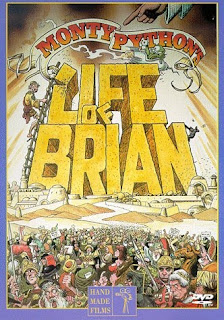
Notably, British comedy itself has had monumental success, with the ludicrous antics of the Monty Python team, depicting common day antics and side splitting jokes. The genre has had plenty of inspiration to draw on over the years. With the origins of the genre stemming from Ealing comedies in the 1950s, British film has generally adapted and become more permissive. In many ways, the arrival of Monty Python actually broke societal boundaries , with the exposure of sex and blasphemy, as seen in 'Monty Python's Life of Brian and 'The Holy Grail'. Following the success of Monty Python, John Cleese, Micheal Palin and Eric Idle became infamous household names.
Following the success of 'The Life of Brian and 'The Holy Grail', it was a tough task to create another Python film which would live up to the reputation of the other successful films. However, they managed to produce ' The Meaning of Life' in 1983 which focuses on John Cleese as a school teacher, who has the awkward task of teaching children about sex, whilst not getting it right.
Despite the film's previous successors, 'The Meaning of Life' did not live up to its reputation and resulted in the character separating to pursue other projects. Though , some of the actors such as Cleese and Palin had cameo appearances and writing stints, but nothing as successful as the Python films.


Subscribe to:
Posts (Atom)